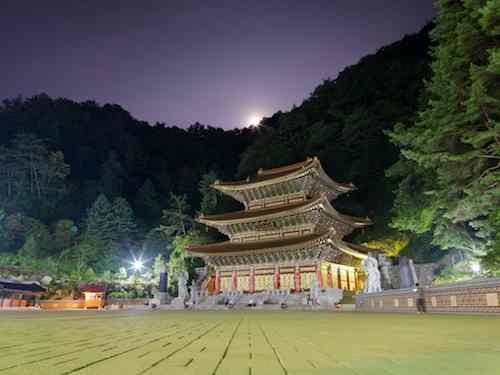
To understand South Korea beyond K-pop, technology, and modern cities, it is important to understand two traditions that have profoundly influenced Korean society: Buddhism and Confucianism.
Although they developed in different historical and cultural settings, both traditions have shaped Korean values, architecture, education, family relationships, art, and ideas about how people should live.
Buddhism in Korea: Finding Peace and Understanding
Buddhism reached the Korean Peninsula during the Three Kingdoms period and gradually became an important part of Korean culture. It flourished particularly during the Silla and Goryeo dynasties, when royal families and governments supported Buddhist institutions.
Korean Buddhism left behind an extraordinary cultural legacy. Mountain temples, stone pagodas, statues, paintings, and wooden buildings remain important parts of Korea’s cultural heritage.
At its heart, Buddhism focuses on understanding human suffering and the causes of attachment and desire. Through meditation, ethical living, mindfulness, and wisdom, practitioners seek greater understanding and inner peace.
Today, Buddhism in Korea can also be experienced outside a strictly religious context. A visit to a mountain temple can provide an opportunity to slow down, walk quietly, disconnect from everyday stress, and reflect on life.
For international travelers, this peaceful side of Korean Buddhism can be an especially meaningful cultural experience.
Confucianism in Korea: Family, Education and Social Responsibility
Confucianism came to Korea during ancient times but became particularly influential during the Joseon Dynasty. Unlike Buddhism, which focuses strongly on spiritual development and liberation from suffering, Confucianism emphasizes ethical relationships and responsibilities within society.
Respect for parents, proper conduct, education, personal discipline, and responsibility toward family and community became important values.
Confucian traditions also influenced Korea’s educational culture. Academies known as seowon and other educational institutions became centers for scholarship and moral education.
Many aspects of traditional Korean etiquette and family culture still reflect Confucian influence, even among people who do not consider themselves Confucian.
Two Traditions, One Cultural Landscape
Buddhism and Confucianism should not be viewed simply as competing belief systems. Throughout Korean history, they occupied different but sometimes overlapping roles.
Buddhist temples became places associated with spirituality, meditation, art, and nature. Confucian academies and schools emphasized scholarship, ethical behavior, and social responsibility.
Together, these traditions helped shape a culture that places considerable importance on self-discipline, education, respect, community, and personal reflection.
Their influence can still be seen throughout South Korea—from ancient temples and historic villages to family traditions, architecture, ceremonies, and everyday social customs.
Experiencing Korea Through Its Traditions
For travelers, learning about Buddhism and Confucianism offers a different way to experience South Korea.
A visit to a mountain temple can provide a quiet encounter with Korean Buddhist culture, while exploring a traditional Confucian academy or historic village can reveal how education and social values developed over centuries.
You do not have to practice either tradition to appreciate its cultural significance.
In fact, one of the most interesting aspects of Korean culture is the way ancient traditions continue to exist alongside one of the world’s most technologically advanced societies.
Buddhism offers a window into Korea’s traditions of mindfulness, contemplation, and inner peace. Confucianism provides insight into family, education, relationships, and social responsibility.
Together, they help explain why Korea’s modern culture is deeply connected to its historical past.
Understanding these two traditions is therefore not simply a lesson in religion or philosophy. It is a way to understand how Korea became the country it is today—and why its ancient cultural heritage remains relevant in modern life.
FAQ
What is the difference between Buddhism and Confucianism in Korea?
Buddhism focuses strongly on understanding suffering, overcoming attachment, developing wisdom, and finding inner peace. Confucianism emphasizes ethical relationships, family responsibilities, education, personal discipline, and social harmony.
When did Buddhism arrive in Korea?
Buddhism reached the Korean Peninsula during the Three Kingdoms period and became an important cultural and political force, particularly during the Silla and Goryeo dynasties.
When did Confucianism become important in Korea?
Although Confucian ideas were present in Korea much earlier, Confucianism became especially influential during the Joseon Dynasty, when it became the dominant ideological framework for government, education, and social ethics.
Is South Korea a Buddhist country?
South Korea is a religiously diverse and largely secular society. Buddhism remains an important part of Korean cultural heritage, but many Koreans today do not formally identify with a religion.
How does Confucianism influence Korean culture today?
Confucian ideas can still be seen in aspects of Korean family relationships, respect for elders, education, social etiquette, hierarchy, and expectations regarding personal responsibility.
Can tourists experience Korean Buddhism without being religious?
Yes. Visitors can appreciate Korean Buddhist temples as historical, architectural, cultural, and natural destinations. Mountain temples can also provide a peaceful environment for walking, reflection, and experiencing traditional Korean culture.
Why should foreigners learn about Buddhism and Confucianism?
These traditions provide important context for understanding Korean history, family culture, education, social relationships, architecture, art, and many aspects of contemporary Korean society.