Planning a trip to South Korea in 2026? Busan should be high on your itinerary.
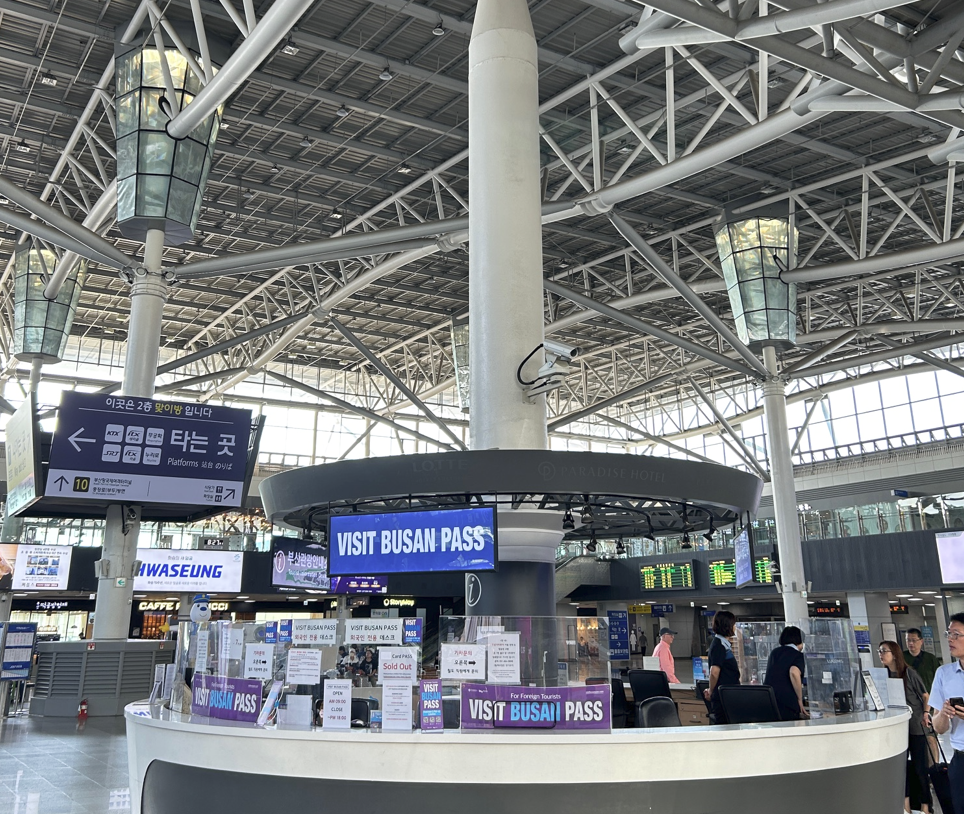
South Korea’s second-largest city is dramatically different from Seoul. Here, skyscrapers meet sandy beaches, traditional markets sit alongside modern cafés, and mountains rise directly behind the city. Busan is a destination where you can spend the morning walking along the coast, enjoy fresh seafood for lunch, explore a colorful hillside neighborhood in the afternoon, and finish the day watching the lights of Gwangan Bridge.
The official Visit Busan tourism guide currently highlights attractions ranging from Haeundae Beach and Gamcheon Culture Village to Gwangalli, Taejongdae, Huinnyeoul Culture Village, and the city’s historic downtown.
If you’re wondering where to go in Busan, what to eat, where to stay, how many days you need, and what to do in 2026, this guide has you covered.
Busan at a Glance
Destination: Busan, South Korea
Recommended trip length: 2–4 days
Best for: Beaches, seafood, culture, photography, cafés, nightlife, nature and city sightseeing
Main transportation: Subway, buses, taxis and walking
Major areas: Haeundae, Gwangalli, Seomyeon, Nampo-dong, Jagalchi, Yeongdo and Gamcheon
Busan’s attractions are spread across a large metropolitan area, so planning your itinerary by neighborhood can save considerable travel time. Current 2026 travel guides similarly recommend grouping the eastern coastal attractions separately from the historic western districts rather than constantly crossing the city.
Best Places to Visit in Busan in 2026
1. Haeundae Beach
Haeundae Beach is arguably Busan’s most famous seaside destination.
The long sandy beach is surrounded by hotels, restaurants, cafés, shopping areas and entertainment venues, making Haeundae an easy place to spend several hours.
Don’t limit your visit to the sand. The surrounding area offers coastal walks and attractions, while Dongbaekseom Island provides a quieter natural setting close to the main beach.
The official Visit Busan guide continues to feature Haeundae as one of the city’s representative attractions.
Best time to visit: Early morning for a quieter atmosphere or evening for a seaside walk.
2. Gwangalli Beach & Gwangan Bridge
If Haeundae represents Busan’s classic beach experience, Gwangalli Beach represents its nighttime personality.
The biggest attraction is the view of Gwangan Bridge, which stretches across the water and becomes especially striking after sunset.
The official tourism site specifically recommends Gwangalli for its spectacular nighttime scenery and also features the Gwangalli M Drone Light Show among current Busan attractions and events.
Grab a coffee, sit near the beach, and watch the bridge illuminate the night sky.
Travel tip: Gwangalli is particularly enjoyable after sunset.
3. Gamcheon Culture Village
No first-time Busan itinerary is complete without Gamcheon Culture Village.
Built along steep hillsides, Gamcheon is famous for its colorful houses, narrow lanes, murals, viewpoints and small galleries.
The official Visit Busan guide lists Gamcheon Culture Village among its Top 8 Must-Visit Places in Busan.
Because this is a residential neighborhood as well as a tourist destination, visitors should be respectful of residents, avoid excessive noise and stay within appropriate public areas.
Best for: Photography, walking, art and panoramic city views.
4. Jagalchi Market
For travelers interested in Busan’s identity as a port city, Jagalchi Market is a must-visit.
The market is located in the historic downtown area near Nampo-dong and offers an opportunity to experience Busan’s seafood culture firsthand.
The official tourism site recommends a Nampo-dong and Jagalchi historic downtown route, making it easy to combine the market with other nearby attractions.
Try fresh seafood or simply walk through the market to experience one of the most distinctive parts of Busan’s food culture.
5. Nampo-dong & BIFF Square
Nampo-dong is one of the best areas to experience Busan’s combination of shopping, street food, entertainment and history.
Nearby BIFF Square is closely associated with the Busan International Film Festival, while the surrounding streets offer countless restaurants, shops and snack stalls.
The area works particularly well when combined with Jagalchi Market, Gukje Market and Yongdusan Park.
6. Taejongdae Park
For a completely different side of Busan, head to Taejongdae Park on Yeongdo Island.
The area is known for dramatic coastal scenery, cliffs, forests and ocean views.
The official Visit Busan website includes Taejongdae Park among its current Top 8 Must-Visit Places and highlights its long history and Yeongdo Lighthouse.
It is an excellent choice if you want to escape the density of downtown Busan and spend time surrounded by nature.
7. Huinnyeoul Culture Village
Often compared with Gamcheon because of its hillside setting, Huinnyeoul Culture Village offers a different atmosphere.
The village sits beside the sea on Yeongdo Island, with narrow streets, cafés, artwork and dramatic coastal views.
The official tourism guide describes Huinnyeoul as a culture village located along a steep cliff and includes it among Busan’s popular destinations.
8. Hwangnyeongsan
Want to see Busan from above?
Hwangnyeongsan is one of the city’s most popular viewpoints.
From the mountain, visitors can see much of Busan’s urban landscape, including the coastline and illuminated buildings after dark.
The official Visit Busan guide currently highlights the Hwangnyeongsan Viewing Lounge as a recommended destination and provides travel information for reaching it.
Best time: Sunset and nighttime.
What to Eat in Busan
One of the best reasons to visit Busan is its food.
Dwaeji-gukbap
Dwaeji-gukbap, or pork-and-rice soup, is one of Busan’s best-known local dishes.
The comforting combination of pork, broth and rice makes it particularly popular as an inexpensive and satisfying meal.
For travelers interested in local cuisine, the official Visit Busan guide features Busan food recommendations and currently highlights restaurants and dishes selected by the MICHELIN Guide.
Fresh Seafood
Being a major port city, Busan naturally has a strong seafood culture.
Jagalchi and other traditional markets are good places to explore the city’s relationship with the ocean.
Depending on the season, menus may include a wide variety of fish, shellfish and other seafood.
Korean Street Food
Don’t leave Busan without trying some street food.
Look around BIFF Square, Nampo-dong and Bupyeong Kkangtong Market for snacks such as:
- Eomuk (Korean fish cake)
- Hotteok
- Tteokbokki
- Gimbap
- Fried snacks
- Various seafood dishes
The official Visit Busan guide specifically features Bupyeong Kkangtong Market and Busan’s food-focused travel experiences.
Where to Stay in Busan
Choosing the right neighborhood can make a significant difference to your trip.
Haeundae — Best for Beaches
Choose Haeundae if you want:
- Beach access
- Ocean-view hotels
- Restaurants and cafés
- Resort-style accommodation
- Easy access to eastern Busan attractions
Gwangalli — Best for Night Views
Stay around Gwangalli if your priority is:
- Gwangan Bridge views
- Beachfront cafés
- Restaurants
- Nightlife
- A lively evening atmosphere
Seomyeon — Best for a Central Base
Seomyeon is a practical choice for travelers who want convenient access to different parts of Busan.
It is especially useful if you plan to spend your days exploring different neighborhoods.
Nampo-dong — Best for Food & Historic Busan
Nampo-dong is ideal if you want to stay close to:
- Jagalchi Market
- Gukje Market
- BIFF Square
- Yongdusan Park
- Historic downtown Busan
How to Get Around Busan
You don’t necessarily need to rent a car in Busan.
The city has an extensive public transportation network, including the Busan Metro, buses and taxis. The official Visit Busan website provides dedicated information for the Busan Metro and Busan City Tour Bus.
The Busan City Tour Bus is another option for visitors who want a sightseeing-oriented way to explore the city. The official tourism site is currently promoting a Green Line designed to explore Busan in a day.
Travel tip
Because Busan is geographically spread out, organize your sightseeing by area.
For example:
Day 1: Haeundae → Dongbaek → Gwangalli
Day 2: Gamcheon → Jagalchi → Nampo-dong
Day 3: Taejongdae → Huinnyeoul → Yeongdo
This reduces unnecessary backtracking.
Best Time to Visit Busan
Spring — March to May
Spring offers comfortable conditions for sightseeing, coastal walks and outdoor activities.
It can also be a beautiful time to explore Busan’s parks and neighborhoods.
Summer — June to August
Summer is ideal if your main goal is the beach.
Haeundae and Gwangalli become especially lively, but this is also a popular travel period, so accommodation and major attractions can be busy.
Autumn — September to November
Autumn is one of the most attractive seasons for combining sightseeing with outdoor activities.
The official Visit Busan site is currently promoting October 2026 as a month filled with festivals and seasonal attractions, including autumn scenery at Daejeo Eco Park.
Winter — December to February
Winter is quieter and can be a good option if you prefer fewer crowds.
The beaches remain beautiful even when swimming isn’t practical, while cafés, markets, museums and indoor cultural attractions provide plenty of alternatives.
Best 3-Day Busan Itinerary for 2026
Day 1 — Haeundae & Gwangalli
Morning:
Haeundae Beach
Lunch:
Local seafood or Korean food around Haeundae
Afternoon:
Dongbaekseom and the surrounding coastal area
Evening:
Travel to Gwangalli Beach
Night:
Dinner and Gwangan Bridge views
Day 2 — Gamcheon, Jagalchi & Nampo-dong
Morning:
Gamcheon Culture Village
Lunch:
Jagalchi Market
Afternoon:
Nampo-dong and BIFF Square
Late afternoon:
Gukje Market and surrounding shopping streets
Evening:
Explore Busan’s downtown food scene
This west-side itinerary follows the same general geographic logic recommended by current 2026 Busan travel planning guides: keeping Gamcheon, Jagalchi and Nampo-dong together rather than repeatedly crossing the city.
Day 3 — Yeongdo & Coastal Busan
Morning:
Taejongdae Park
Lunch:
Seafood or local Korean cuisine
Afternoon:
Huinnyeoul Culture Village
Evening:
Return toward central Busan
Optional:
Hwangnyeongsan for a panoramic nighttime view
Best Photo Spots in Busan
If you’re looking for Instagram-worthy locations, add these to your itinerary:
- Gamcheon Culture Village — Colorful hillside views
- Gwangalli Beach — Gwangan Bridge at night
- Haeundae Beach — Classic Busan seaside scenery
- Huinnyeoul Culture Village — Ocean and cliffside views
- Hwangnyeongsan — Panoramic city skyline
- Taejongdae — Dramatic coastal landscapes
- Cheongsapo — Coastal village atmosphere
The official Visit Busan guide currently highlights Cheongsapo and Mipo as small seaside villages and features Haeundae, Gwangalli and other coastal destinations among its popular trips.
Busan Travel Tips for 2026
1. Don’t try to see everything in one day
Busan is a large city, and its attractions are spread out. Two days can cover the highlights, but three days gives you considerably more breathing room.
2. Group attractions geographically
This is one of the most useful Busan travel tips.
Combine eastern attractions such as Haeundae and Gwangalli, and explore Gamcheon, Jagalchi and Nampo-dong together on another day.
3. Bring comfortable shoes
Busan isn’t completely flat. Gamcheon, hillside neighborhoods and mountain attractions involve slopes and stairs.
4. Save time for the evening
Some of Busan’s most memorable scenery appears after sunset, particularly around Gwangalli Beach and Gwangan Bridge.
5. Check official information before traveling
Opening hours, transportation schedules, festivals and temporary events can change. The official Visit Busan website provides current travel information, maps, city-tour information, events and visitor resources.
The site also lists the Busan Travel Hotline 1330 as a travel-information resource.
Is Busan Expensive?
Busan can accommodate different travel budgets.
You can keep costs relatively low by using public transportation, eating at traditional markets and local restaurants, and choosing budget accommodation.
At the same time, Haeundae and Gwangalli offer upscale hotels, ocean-view restaurants and cafés for travelers looking for a more luxurious experience.
One advantage of Busan is that many of its most memorable experiences—walking along the beach, exploring neighborhoods, viewing the coastline and enjoying the city at night—don’t require expensive admission fees.
Why Visit Busan in 2026?
Busan continues to develop as an international tourism destination while maintaining its identity as a major Korean port city.
The official tourism website’s 2026 content includes new and ongoing experiences ranging from Busan City Tour Bus routes and Seven Bridges tours to cultural programs, food experiences, seasonal festivals and K-culture travel themes.
That combination is what makes Busan so appealing.
You can experience modern Korea through its cafés, shopping districts and contemporary culture, while also discovering traditional markets, historic neighborhoods and centuries-old landscapes.
And unlike Seoul, where the urban landscape dominates, Busan constantly reminds you that the ocean is never far away.
Final Thoughts: Is Busan Worth Visiting?
Absolutely—especially if you want to experience a different side of South Korea.
Busan combines many things that travelers normally have to visit several destinations to experience: beaches, mountains, seafood, markets, culture, nightlife, history and spectacular coastal scenery.
Spend a morning at Haeundae, discover the colorful lanes of Gamcheon, eat seafood at Jagalchi, watch Gwangan Bridge light up at night, and finish your trip with a panoramic view from Hwangnyeongsan.
That is the essence of Busan.
It isn’t simply a beach destination or a large Korean city.
Busan is a city where the ocean shapes the landscape, food, culture and rhythm of everyday life.
And in 2026, it remains one of the most fascinating places to add to a South Korea travel itinerary.
Peter Yang