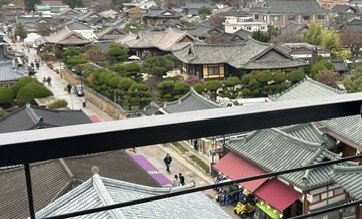
Jeonju Hanok Village is more than a picturesque neighborhood filled with traditional Korean houses. It is a place where Korea’s past and present still occupy the same streets.
With more than 700 hanok, the village is one of Korea’s most important traditional cultural destinations. But its real significance is not simply that so many old houses survived. The deeper story is why they survived, how the neighborhood changed, and what those changes reveal about modern Korea.
A Village Shaped by History
Jeonju has deep connections to the Joseon dynasty and the Jeonju Yi royal family. Historic landmarks such as Gyeonggijeon Shrine, Omokdae, Pungnammun Gate, and Jeonjuhyanggyo Confucian School preserve important parts of that history.
Yet the Hanok Village itself should not be understood simply as a neighborhood frozen in the Joseon era.
During the early 20th century, Jeonju underwent major urban changes during the Japanese colonial period. As the traditional structure of the old city changed, Korean residents increasingly established hanok neighborhoods around what is now Jeonju Hanok Village.
These houses preserved traditional elements while also adapting to changing lifestyles. In other words, the modern Hanok Village was not simply inherited from the past. It was also created through adaptation to a changing Korea.
That makes Jeonju particularly important: its architecture tells a story not only about tradition, but also about survival and transformation.
A Living Heritage, Not a Museum
One of Jeonju’s greatest strengths is that its heritage remains connected to everyday life.
Traditional houses now contain restaurants, guesthouses, craft workshops, cultural spaces, and small businesses. Visitors can experience hanbok, traditional food, crafts, and other elements of Korean culture while walking through an actual urban neighborhood.
This is why Jeonju can be described as living heritage.
The past has not been completely separated from modern life. Instead, it has been adapted to the present.
That distinction matters. A preserved building can tell visitors what life once looked like. A living neighborhood can show how culture continues to change while retaining its identity.
Jeonju and Seoul Tell Different Stories
Jeonju is often compared with Seoul’s Bukchon Hanok Village, but the two offer different historical perspectives.
Bukchon reflects the historic residential landscape of Korea’s royal capital, located between major Joseon palaces and traditionally associated with the capital’s elite.
Jeonju offers a different perspective. Its hanok neighborhood connects traditional architecture with regional history, food, crafts, religious and educational institutions, and the cultural identity of a major provincial city.
Simply put, Seoul helps explain Korea’s historic capital. Jeonju helps explain how traditional culture continued beyond the capital.
Preservation Created a New Challenge
Jeonju’s preservation efforts helped transform the neighborhood into one of Korea’s most recognizable cultural destinations. Government preservation policies beginning in the late 20th century were followed by cultural regeneration and rapid growth in tourism.
But success created a difficult question.
How can a historic neighborhood remain authentic when millions of people visit it?
Tourism provides economic benefits and helps sustain cultural businesses. At the same time, excessive commercialization can turn a living neighborhood into a themed attraction.
The future of Jeonju Hanok Village therefore depends on more than preserving old buildings. It requires maintaining a balance between heritage, residents, businesses, and visitors.
Why Jeonju Matters
For international travelers, Jeonju offers a question that goes beyond sightseeing:
What happens when a society modernizes without completely abandoning its past?
Jeonju Hanok Village provides one answer.
Its importance does not come from being untouched by history. It comes from having survived history, adapted to change, and remained culturally meaningful in the present.
Seoul shows visitors the Korea that emerged through rapid modernization. Jeonju helps them understand the traditions and historical experiences that continue to shape that Korea.
That is why Jeonju Hanok Village matters. It is not simply a place where Korea’s past is preserved.
It is a place where Korea’s past and present still live together.