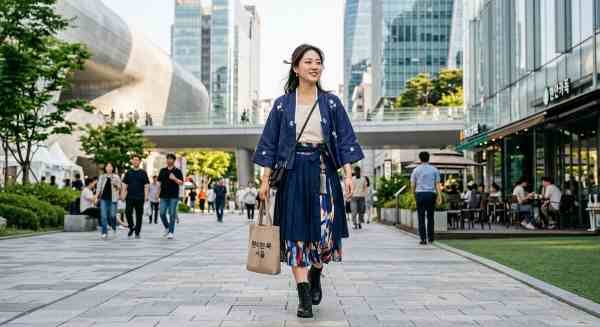
Hanbok, Korea’s traditional clothing, is entering a new era. Once associated mainly with holidays, weddings, ceremonies, and historical occasions, hanbok is increasingly being redesigned for modern life. Today, designers are finding new ways to preserve its distinctive identity while making it more practical, fashionable, and accessible to a global audience.
What Makes Hanbok Unique?
Traditional hanbok is known for its graceful lines, flowing silhouettes, vibrant colors, and distinctive balance between the upper and lower garments. Rather than tightly following the shape of the body, traditional designs often create space and movement.
These characteristics give hanbok a visual identity that is immediately different from Western-style clothing.
Modern designers are using these traditional elements as a starting point rather than treating them as strict rules.
From Traditional Clothing to Modern Fashion
Modern hanbok often simplifies traditional silhouettes to make them easier to wear in everyday life. Long skirts may be shortened, traditional jackets may be redesigned as lightweight outerwear, and hanbok-inspired details can be incorporated into dresses, shirts, coats, and even casual streetwear.
Comfort has also become an important part of modernization.
Instead of creating clothing that is reserved for special occasions, designers are experimenting with fabrics, cuts, and construction methods that allow people to move comfortably while maintaining recognizable Korean design elements.
The result is clothing that feels contemporary without completely losing its cultural identity.
K-Pop and Korean Dramas Bring Hanbok to the World
The global popularity of K-pop and Korean dramas has introduced millions of international viewers to Korean fashion.
Artists and actors increasingly appear in hanbok-inspired clothing, while music videos, performances, historical dramas, and fashion campaigns present traditional Korean aesthetics in new ways.
For international audiences, this can make hanbok feel less like a historical costume and more like a living fashion tradition.
The growing global interest in Korean culture has also encouraged designers to experiment with how hanbok can communicate Korean identity in an international fashion market.
Hanbok as a Global Fashion Statement
Modern hanbok is also appearing outside traditional cultural settings.
Some designers combine hanbok-inspired shapes with contemporary tailoring. Others use traditional Korean colors, patterns, embroidery, or fabric techniques in modern clothing and accessories.
This approach allows people to express an interest in Korean culture without necessarily wearing a complete traditional outfit.
That may be one of the most important changes taking place.
Instead of asking whether modern clothing looks exactly like traditional hanbok, designers are asking a different question: What makes a piece of clothing feel Korean while still belonging in today’s world?
Preserving Tradition by Allowing It to Change
Modernization does not necessarily mean abandoning tradition.
Cultural traditions often survive because each generation finds a way to reinterpret them. Hanbok is no exception.
If traditional clothing were limited to museums and ceremonial occasions, younger generations might gradually become disconnected from it. By adapting its shapes, materials, colors, and styling to contemporary lifestyles, designers can give hanbok a place in everyday culture.
The future of hanbok may therefore not be about reproducing the past exactly.
It may be about carrying the spirit of the past into the future.
The Future of Modern Hanbok
As interest in K-culture continues to grow around the world, modern hanbok has an opportunity to become one of Korea’s most recognizable cultural fashion symbols.
Its future could include everything from everyday clothing and street fashion to luxury collections, performance costumes, accessories, and international collaborations.
The most successful modern hanbok may ultimately be clothing that does not require an explanation. People will wear it because they like the design, the comfort, and the feeling it creates.
That is the real power of modernization.
Hanbok is no longer simply clothing from Korea’s past. It is becoming a way to express Korean identity in the present—and perhaps one of the most exciting ways to bring Korean culture into the future.
FAQ
What is modern hanbok?
Modern hanbok is contemporary clothing inspired by traditional Korean hanbok. Designers may preserve recognizable elements such as flowing silhouettes, colors, lines, and patterns while adapting the clothing for modern lifestyles.
How is modern hanbok different from traditional hanbok?
Traditional hanbok follows established forms and is commonly worn for cultural ceremonies and special occasions. Modern hanbok often uses simplified silhouettes, contemporary fabrics, and practical designs suitable for everyday wear.
Is hanbok becoming popular outside Korea?
Interest in hanbok has grown internationally alongside the global popularity of K-pop, Korean dramas, Korean food, and other aspects of K-culture.
Why is hanbok important to Korean culture?
Hanbok represents an important part of Korea’s cultural heritage. Its distinctive shapes, colors, fabrics, and styling reflect Korea’s history and aesthetic traditions.
Can hanbok be worn as everyday clothing?
Yes. Modern hanbok designers increasingly create pieces that are comfortable and practical enough for everyday use, including jackets, skirts, dresses, shirts, and accessories inspired by traditional Korean design.
How has K-pop influenced modern hanbok?
K-pop artists have helped introduce Korean fashion aesthetics to international audiences by incorporating hanbok and hanbok-inspired clothing into performances, music videos, photoshoots, and fashion collaborations.
Is modern hanbok still considered traditional Korean clothing?
Modern hanbok is best understood as a contemporary interpretation of traditional Korean clothing. It may not follow every traditional construction rule, but it can preserve important elements of Korean design and cultural identity.