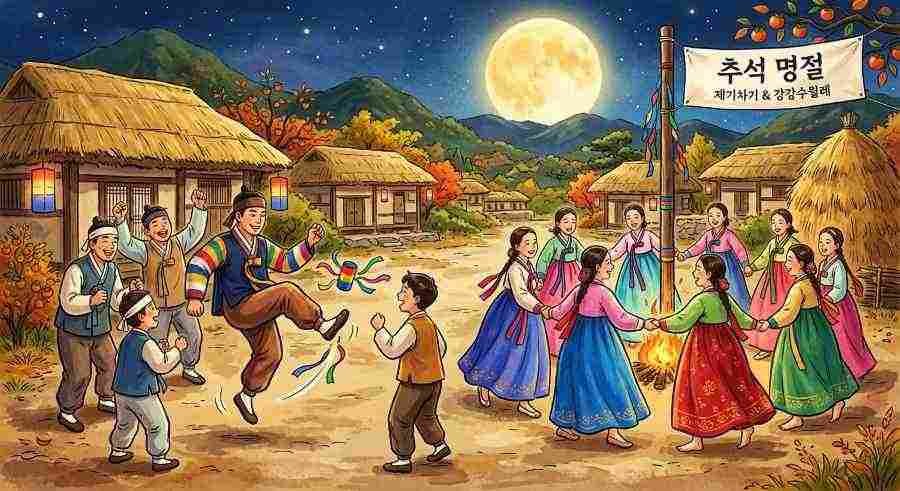
Every year, millions of Koreans celebrate Chuseok, one of the country’s most important traditional holidays.
Often described in English as “Korean Thanksgiving,” Chuseok is tied to the autumn harvest, family reunions, gratitude, and ancestral remembrance. In 2026, Chuseok falls on Friday, September 25, with the official public holiday running from September 24 to 26.
But Chuseok is more than a Korean version of Thanksgiving. At its core, it’s a pause — a moment to remember where you came from and reconnect with the people who matter most, in a world where families increasingly live scattered across cities and countries and talk mostly through text messages.
What Is Chuseok?
Chuseok is celebrated on the 15th day of the eighth month of the lunar calendar, when the full moon marks the height of the festival. Because the date follows the lunar calendar, it shifts each year on the Gregorian calendar, usually landing in September or early October.
The holiday is rooted in the autumn harvest. In an agricultural society, a good harvest meant survival for the year ahead, making it a natural occasion for gratitude and celebration. Families traditionally prepared special foods, honored their ancestors, visited family graves, and gathered together.
Today, the way people celebrate varies widely: some families still hold formal ancestral ceremonies, while others simply share a meal, travel, exchange gifts, or spend time together. For Koreans living abroad, Chuseok is often less about ritual and more about reconnecting with Korean culture and family history.
The History and Origins of Chuseok
The exact origins of Chuseok are debated, but the holiday’s roots stretch back more than a thousand years.
One tradition often linked to its origins is Gabae, recorded during Korea’s ancient Silla period: two teams reportedly competed in a month-long weaving contest that ended on the 15th day of the eighth lunar month, celebrated with food, music, and festivities.
Over time, the holiday became tied more closely to the harvest itself. For farming communities, the harvest was the payoff of an entire year’s labor — reason enough to celebrate, and reason enough to be grateful. That’s the thread connecting Chuseok’s past to its present: it began as a celebration of survival and abundance, and it still functions as one, just measured differently.
Chuseok Traditions: How Koreans Celebrate
1. Family Gatherings (Gwiseong)
Family is the center of Chuseok. Traditionally, people travel back to their hometowns — an annual migration so large it creates some of the country’s worst traffic of the year, as millions move in and out of Seoul over the same few days.
Increasingly, families are spread across the country and the world, and video calls have become part of how Chuseok is “attended” when travel isn’t possible. The custom changes; the point — staying connected — doesn’t.
2. Remembering Ancestors
Many families perform Charye, a memorial rite where food is arranged and ancestors are formally honored, followed by Seongmyo, visiting and tending ancestral graves.
Not every family practices these rituals today, and it’s worth noting Chuseok isn’t uniformly idyllic — the pressure of hosting, cooking, and travel has given rise to the term myeongjeol jeunghugun (“holiday syndrome”), the stress many Koreans, especially women who do the bulk of the cooking, associate with the holiday. Chuseok’s meaning has always included both gratitude and the real labor behind it.
3. Eating Songpyeon
Songpyeon is a crescent-moon-shaped rice cake filled with sesame seeds, beans, chestnuts, or other sweet fillings, traditionally steamed over a bed of pine needles. Shapes and fillings vary by region — for instance, some areas favor smaller, more delicate cakes, others larger ones. Families often make songpyeon together, and the process of making it — not just eating it — is the point: an activity that gives multiple generations a reason to sit down and talk.
4. Traditional Games and Activities
Chuseok has historically included community entertainment such as:
- Ssireum, traditional Korean wrestling
- Yutnori, a board game played with wooden sticks, popular with families and children
- Ganggangsullae, a circle dance traditionally performed by women under the full moon, with roots in Korean folk culture
These weren’t just side entertainment — they turned the holiday into a communal event, not only a private or ceremonial one.
Why Chuseok Matters in Modern Society
Modern life has changed family structures: people move for work and school, international families are common, and grandparents and grandchildren often live an ocean apart. Instant messaging keeps people in touch, but staying in touch isn’t the same as staying connected.
Chuseok pushes back against that gap. A shared meal accomplishes something a stream of texts can’t. A conversation with a parent can preserve a memory that would otherwise be lost. A story from a grandparent links a child to people they never met.
How to Celebrate Chuseok Today
You don’t need to follow every traditional custom to take something from Chuseok.
Cook together. Making songpyeon, Korean pancakes (jeon), or japchae together turns a meal into a shared experience.
Call your family. A video call, especially across countries, closes distance in a way texts don’t.
Ask an older relative about their childhood. “What was Chuseok like when you were young?” With permission, record the answer — these stories rarely get written down otherwise.
Share with others. Invite someone who’d otherwise spend the holiday alone, or share food with a neighbor.
Reflect. Ask yourself: What am I grateful for? Who helped me get here? Who should I reconnect with?
Chuseok for Koreans Living Outside Korea
For Korean Americans and the wider Korean diaspora, Chuseok can act as a bridge between generations and cultures — parents introducing traditions to children born abroad, grandparents sharing childhood stories, families cooking Korean food while explaining what it means. For non-Korean friends and neighbors, it’s also an accessible entry point into Korean culture: values like gratitude, remembrance, and generosity translate across cultures even when the specific customs don’t.
The Meaning of the Full Moon
The full moon symbolizes abundance and completeness. Families aren’t always whole, disagreements happen, and some loved ones are no longer around — but Chuseok asks you to notice what remains: a shared meal, a phone call, a memory, a tradition passed to a new generation. Ordinary as they sound, these are often the parts of life worth the most.
A Holiday About What Really Matters
Chuseok has lasted this long because its core message isn’t tied to one era. An agricultural society needed to celebrate the harvest; a hyperconnected, always-busy one needs a reminder to slow down and appreciate the people already around it.
The greatest harvest isn’t what’s gathered from the land — it’s what’s built in relationships.
Frequently Asked Questions About Chuseok
What is Chuseok?
Chuseok is a major Korean holiday on the 15th day of the eighth lunar month, centered on the autumn harvest, family gatherings, gratitude, ancestral remembrance, and traditional food.
Is Chuseok the same as Thanksgiving?
It’s often called “Korean Thanksgiving” for the shared emphasis on gratitude and family gatherings, but Chuseok has its own distinct history and rituals, including ancestral rites and grave visits not found in the American holiday.
When is Chuseok celebrated?
Because it follows the lunar calendar, the date shifts each year on the Gregorian calendar. In 2026, Chuseok falls on Friday, September 25, with the public holiday running September 24–26. In 2027 it falls on September 15, and in 2028 on October 2.
What food is eaten during Chuseok?
Popular dishes include songpyeon, Korean pancakes (jeon), japchae, seasonal fruit, and various meat and vegetable dishes, with specifics varying by family and region.
Why do Koreans visit graves during Chuseok?
This custom, called Seongmyo, is a way of honoring and remembering deceased family members.
What is songpyeon?
A crescent-shaped rice cake traditionally steamed over pine needles, filled with ingredients like sesame, beans, or chestnuts. Shape and filling vary by region.
What games are played during Chuseok?
Traditional activities include Ssireum (wrestling), Yutnori (a board game), and Ganggangsullae (a circle dance historically performed by women).
How can Americans celebrate Chuseok?
By cooking Korean food, gathering with family or friends, learning family history, and sharing food or company with others — no specific ancestry required to take part in the spirit of it.
Why is Chuseok still important today?
It gives people a structured reason to slow down, reconnect with family, and remember previous generations in a culture that otherwise moves fast and stays busy.