Henry Gerhard Appenzeller (1858–1902) is among the first names in the history of Korean Protestantism. Following his path shows how one clear purpose grew into schools, churches, and a Bible translation effort.
1. Appenzeller Reached Busan First (April 2, 1885)
Appenzeller is usually remembered as arriving at Jemulpo (today’s Incheon), but he landed in Busan before that. According to the Methodist Episcopal missionary society report quoted on an exhibit panel in Busan, the party left Nagasaki on March 31 and arrived in Busan on April 2.
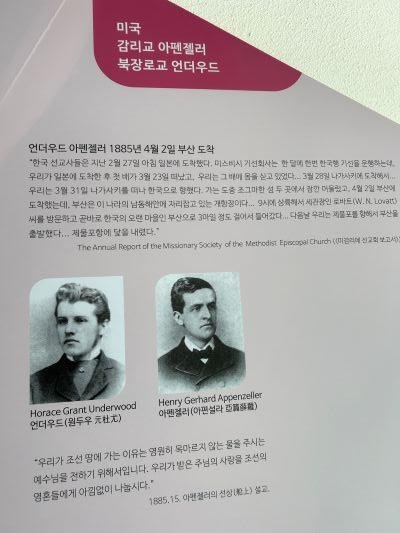
They went ashore at 9 a.m., called on the customs commissioner, and then walked about three miles into the old Korean town of Busan. A JoongAng Daily feature also notes that the couple came via Japan and Busan before setting foot in Jemulpo. The party reached Jemulpo on Easter Sunday, April 5, 1885.
2. The Purpose Stated in a Sermon at Sea
The same panel quotes a sermon Appenzeller gave aboard ship. He said the missionaries were going to Korea to share Jesus, the giver of water that never runs dry, and to pass on to the Korean people the love they had received. Shortly after arriving at Jemulpo, he also reported to his mission board. According to one sermon text, he wrote that they had arrived on Easter morning and prayed that the people would receive freedom and light. The date printed beneath the panel’s sermon (“1885.15.”) is unclear, so the exact date of the sermon should be verified separately.
3. Waiting Was Part of the Mission
Seoul was politically unsettled, and the U.S. minister warned that the capital was no place for a foreign woman. The Appenzellers are generally understood to have returned to Japan for a time and to have re-entered Korea that June, settling in the Jeong-dong district of Seoul.
4. Appenzeller’s Major Work
Pai Chai School: Opening the Door to Modern Education
After arriving, Appenzeller opened a small classroom in Seoul. King Gojong is said to have given the school the name “Pai Chai” (meaning a hall for nurturing talent). The school is known for producing reform-era figures such as Philip Jaisohn and Yun Chi-ho. More recently, Appenzeller’s handwritten records and letters from the school have been targeted for restoration.
Chungdong First Methodist Church: A Worshipping Community
He is remembered as the missionary who founded both Pai Chai and Chungdong Church, which shows how he built education and worship side by side. The church later hosted lectures and concerts that helped spread new ideas. During his time at Jemulpo, he worshipped at Naeri Church in Incheon, regarded as Korea’s first Protestant church.
Bible Translation: Scripture in the Korean Language
The Gospel text the first missionaries carried with them was Lee Su-jung’s Korean translation of the Gospel of Mark. Appenzeller later joined the Bible translation work, and it was this very task that sent him on his final journey. For an English-language overview, see the Boston University missionary biography and the United Methodist Church profile.
5. Dedication to the Very End (June 1902)
In June 1902, Appenzeller was traveling to a Bible translation committee meeting in Mokpo when a ship collision off Kunsan ended his life at age 44. One op-ed account says he died trying to save a girl who had fallen into the water, and his remains were never recovered. A memorial stone was later placed near Eocheongdo in the Gogunsan Islands, and a memorial hall and church were built in Kunsan in 2007. Accounts differ on the details of the rescue.
6. A Lasting Legacy: Alice Appenzeller
When the family first set foot in Korea, Ella Appenzeller was expecting a child. In the story of the Jemulpo centennial monument, that unborn baby is identified as Alice Rebecca Appenzeller, who devoted her life to the education of Korean women. The father’s purpose carried on in his daughter.
Frequently Asked Questions
Did Appenzeller arrive in Busan or Incheon?
Both. He landed in Busan on April 2, 1885, and reached Jemulpo (Incheon) on Easter, April 5. Jemulpo is usually commemorated as the official point of entry.
What did Appenzeller found in Korea?
Pai Chai school and Chungdong First Methodist Church, and he contributed significantly to Bible translation.
How did Appenzeller die?
In June 1902, the ship carrying him to a Bible translation meeting in Mokpo collided with another vessel off Kunsan, and he died in the accident.
Conclusion
From the shore at Busan to the waters off Kunsan, Appenzeller’s purpose never changed: to share freely the love he had received with the people of Korea.